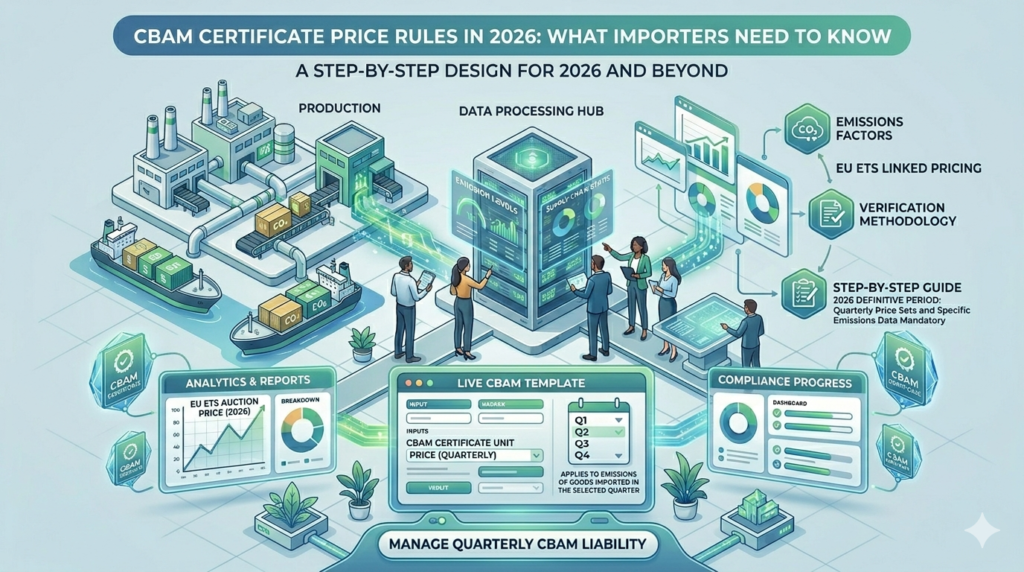
The CBAM certificate price is no longer a future concept. It is now a live part of import planning for covered goods entering the EU. The price is linked to EU ETS auction clearing prices, which means it moves with the carbon market instead of staying fixed. In 2026, the price is set quarterly, and each quarterly price applies only to emissions in goods imported during that quarter.
What the pricing rule actually means
The CBAM certificate price rules are designed to mirror the EU carbon market as closely as possible. The European Commission calculates the certificate price using publicly available information from EU ETS auctions. In 2026, the calculation happens during the first calendar week after the quarter ends, and the price is then published on the first working day of the following calendar week. That makes the process structured, even if the market itself keeps moving.
This matters because the CBAM certificate price is not just a reporting number. It can affect landed cost, sourcing choices, and margin planning. A small movement in carbon price may look minor on paper, yet it can become meaningful across multiple shipments and product lines. For importers, that makes timing and forecast accuracy far more important than before.
Why 2026 is a turning point
The first 2026 CBAM certificate price was published on 7 April 2026. The European Commission also confirmed that there will be four prices in 2026, one for each quarter. That is a key shift from a simple annual estimate to a more responsive pricing structure.
Another important point is the timing for purchase. Importers of CBAM goods will have to buy CBAM certificates from February 2027 to cover their 2026 imports. So the price set in 2026 is not academic. It feeds into real future obligations.
What companies should watch closely?
A few practical issues keep showing up in compliance planning.
- Quarterly price changes can alter the forecasted cost.
- Emissions data quality affects financial exposure.
- Reporting delays can create avoidable stress.
- Poor supplier data can weaken estimates.
This is where CBAM certificate price rules and internal data systems start to overlap. The regulation may define the price, but company systems decide how prepared the business actually is.
Tools that can help with the workflow
Software does not change the official CBAM certificate price, but it helps teams manage the data behind it. A few platforms that are commonly used for emissions and reporting work include:
- Sphera, which focuses on emissions data, reporting, and audit-ready sustainability workflows.
- Coolset, which supports compliance-focused carbon accounting and CBAM-related workflows.
- Persefoni, which emphasizes carbon accounting, transparency, and audit trails.
These tools are useful because they reduce manual work and make emissions data easier to trace. That kind of structure matters when the CBAM certificate price starts affecting real procurement decisions.
Why are the rules built this way
The logic behind the CBAM certificate price rules is fairly direct. The EU wants imported goods to face a carbon price that stays aligned with the EU carbon market. That is why the price is tied to EU ETS auction clearing prices instead of being invented separately. In 2026, the average is quarterly. From 2027 onwards, the price is calculated weekly.
That shift from quarterly to weekly pricing shows the system is becoming more dynamic over time. Importers who build strong internal workflows now may find the next phase easier to handle.
Final takeaway
The CBAM certificate price is now a live business variable, not just a compliance note. The CBAM certificate price rules are clear enough, but they still demand careful tracking, good data, and a clean reporting process. Companies that watch the quarterly price, prepare supplier data early, and use the right software will likely feel less pressure when reporting and purchasing obligations grow. For teams that want a clearer way to stay ready, Cbam.in can fit naturally into that workflow.
FAQs
1. What is the CBAM certificate price based on?
The CBAM certificate price is based on EU ETS auction clearing prices, calculated from publicly available auction data.
2. Are the CBAM certificate price rules fixed for the whole year?
No. In 2026, the price is set quarterly, so each quarter has its own price.
3. When was the first 2026 price published?
The first 2026 CBAM certificate price was published on 7 April 2026.
4. Do importers need to buy certificates immediately in 2026?
No. Importers will buy CBAM certificates from February 2027 to cover 2026 imports.
5. Can software help with CBAM compliance?
Yes. Cbam Tools such as Sphera, Coolset, and Persefoni can help manage emissions data, reporting, and audit readiness.